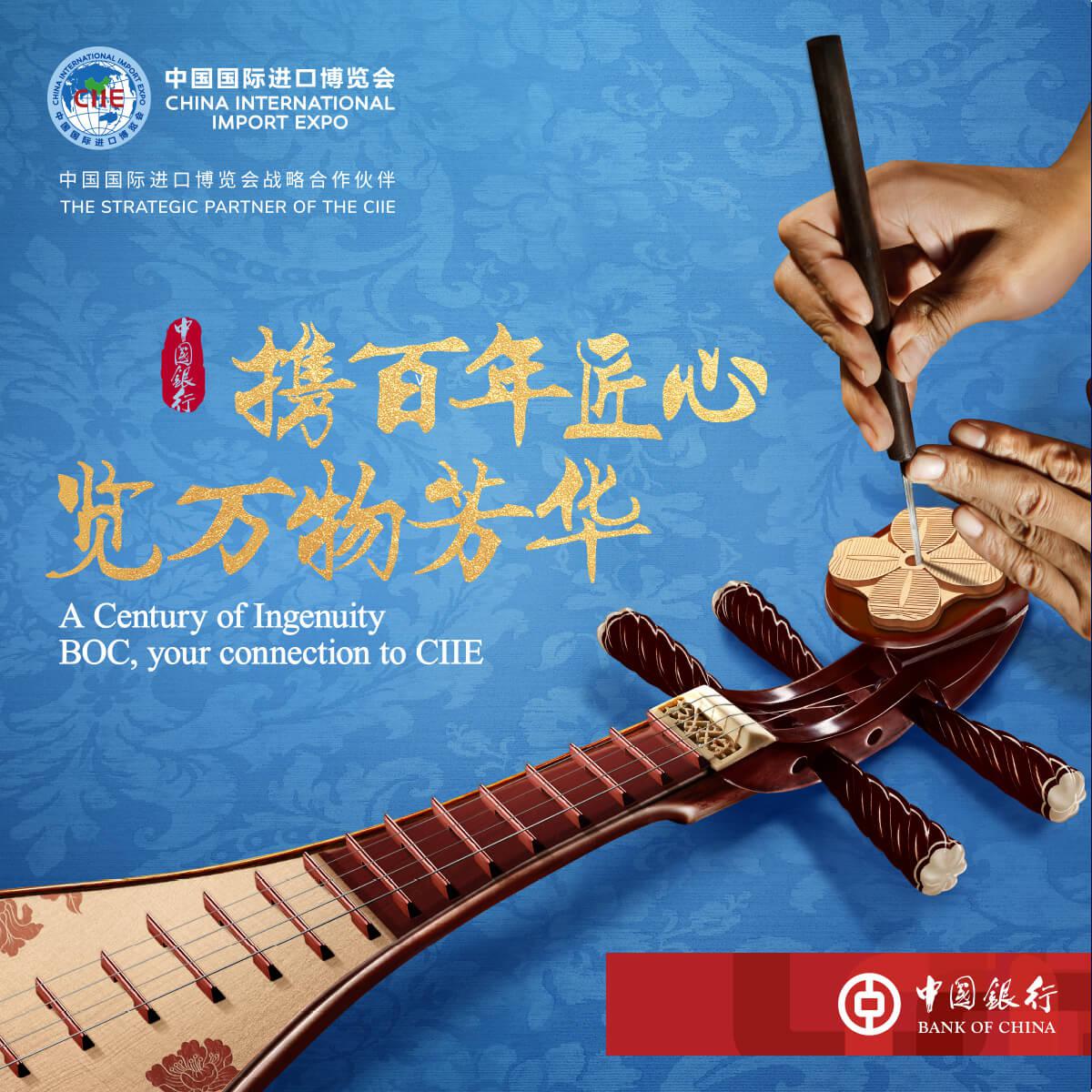
As the permanent venue of the China International Import Expo (CIIE) and bordering the Yangtze River Delta Ecological and Green Integrated Development Demonstration Zone, Shanghai has taken the lead in pioneering internal and external opening-up initiatives in recent years. A host of Shanghai-based enterprises positioned close to multiple national strategies have seized unique first-mover advantages. Leveraging the CIIE as an open platform, they connect global resources and tap potential clients. Supported by Yangtze River Delta integration, they break geographical barriers and share industrial ecosystems. These firms keep reaping dividends in market expansion, client accumulation and industrial upgrading, blazing a steady development path: rooted in Shanghai, linked with the Yangtze River Delta and radiating across the globe.
From Exhibition Booths to Signed Orders: Unlocking Global Cooperation Channels
From tentative debuts to year-round exhibition presence, new product launches and business negotiations, the eight-year-old CIIE has evolved far beyond a mere trade fair into a core platform for enterprises to showcase strengths, engage partners and explore international markets. Both local Shanghai enterprises and newly settled foreign-invested firms capitalize on the expo’s strong magnetism to stage debut releases and premier shows that boost brand influence and secure tangible orders, steadily converting exhibition traffic into growth momentum.
“The CIIE serves as a vital gateway for us to connect with international partners and secure high-quality orders,” said Wu Jinhui, Chairman of Shanghai Nuoyin Electromechanical Technology Co., Ltd. Rooted in Qingpu District and specializing in precision motion control for semiconductors and high-end equipment, the company is a long-term CIIE participant. On the opening day of the 7th CIIE, it sealed a landmark USD 50 million first deal with a German partner.
“Thanks to the CIIE, we gain direct access to world-leading suppliers and numerous manufacturing clients across the Yangtze River Delta, with our cooperation projects growing steadily in scale and quality,” Wu Jinhui added. The expo acts as a global exchange bridge, enabling enterprises to accurately engage upstream and downstream industrial players worldwide without traveling overseas.
The spillover effects of the CIIE have also driven exhibitors from short-term one-off appearances to long-term local investment. After its debut at last year’s CIIE, Thailand’s IFBH Group signed an agreement with West Hongqiao Business District to establish its China headquarters in Qingpu. “The CIIE let us fully witness the huge potential of China’s consumer market. Qingpu District boasts top-tier exhibition infrastructure and sits at the geographic heart of the Yangtze River Delta, making it the ideal base for us to develop China and expand across the Asia-Pacific,” commented Jan, Chief Operating Officer of IFBH Group.
Statistics show that backed by its status as the permanent CIIE host, Qingpu District has fully captured the expo’s spillover gains during the 14th Five-Year Plan period. Over the eight sessions of the CIIE, Qingpu’s transaction delegation secured intended procurement worth more than USD 6.2 billion, while over 1,600 new foreign-funded enterprises registered locally. A growing cluster of foreign corporate headquarters, international trade platforms and professional service firms has expanded the district’s industrial foundation. For enterprises, the CIIE is no longer a one-time event, but a regular platform to access global markets and deepen international cooperation.
Integrated Yangtze River Delta: Building a Thriving Industrial Ecosystem
If the CIIE opens a window for enterprises to engage the world, Yangtze River Delta integration creates a broad stage for them to cultivate the domestic market and strengthen core businesses. As a frontier area of the Yangtze River Delta Integrated Demonstration Zone, enterprises in Qingpu are the earliest to benefit from dismantled administrative barriers and the free flow of logistics, talent, technology and other market factors. Moving past isolated individual operations, cross-regional industrial chain complementarity and coordinated development have become the norm, with this comprehensive industrial ecosystem supporting sustainable long-term growth.
“Yangtze River Delta integration has eliminated cross-regional logistics bottlenecks, overhauled traditional transshipment models, drastically lifted logistics efficiency and cut operational costs,” shared Su Di, Deputy General Manager of Shanghai Hongyue Supply Chain Management Co., Ltd. Ahead of last year’s CIIE, a pre-export consolidation warehouse for sea freight launched in Baihe Town, Qingpu, serving as a key hub for Hongqiao’s cross-border e-commerce and industrial belt pilot zone. Previously, cross-border cargo from Yiwu, Ningbo and other Zhejiang locations required separate local consolidation followed by secondary transit to Shanghai ports, taking over 20 days in total. Today, goods from all parts of the Yangtze River Delta converge at the Qingpu warehouse, where customs clearance, container loading and shipment are completed in one go, cutting transit time to 11 days and doubling overall efficiency. Hundreds of foreign trade enterprises across the delta have benefited from this upgrade. “Qingpu sits at the heart of the Yangtze River Delta with unrivaled accessibility, and integrated policies streamline cross-border customs clearance and logistics collaboration. Our client base has expanded rapidly from local Qingpu to the entire delta,” Su Di explained.
The dividends of regional coordination are equally evident in manufacturing. Air Liquide France, a consistent CIIE exhibitor, operates a plant in Qingpu deeply embedded in the Yangtze River Delta integrated industrial landscape. Its industrial and medical gas products are supplied to factories, hospitals and R&D centers across East China. “Yangtze River Delta integration has continuously improved regional logistics networks and unified industry standards, extending our service reach further,” said Chen Fei, Plant Manager of Air Liquide (Shanghai) Gas Co., Ltd.
From enterprises’ perspective, the CIIE links global cutting-edge technologies and overseas clients, while Yangtze River Delta integration supports domestic market expansion and regional market share growth. These two opportunities of internal and external opening-up reinforce each other and form a virtuous growth cycle.
To date, the Yangtze River Delta Ecological and Green Integrated Development Demonstration Zone has rolled out over 100 institutional innovations, many of which have been replicated and promoted nationwide. High-caliber platforms including the Yangtze River Delta AI Joint Innovation Center and the Yangtze River Delta Institute of Sustainable Development have settled one after another, delivering consistent scientific and technological support for local enterprises. Driven by regional integration, many companies have formed a mature development layout: headquarters and R&D bases in Qingpu, market coverage across the Yangtze River Delta, and global business reach.
The two national strategies advance in tandem, with opening-up and regional coordination complementing each other perfectly. From trade supply chain operators and high-end manufacturers to local indigenous enterprises and newly introduced foreign investment projects, numerous Shanghai-based firms ride the dual momentum of the CIIE and Yangtze River Delta integration to break development boundaries and fuel sustained growth.
Source: China International Import Expo · Wenhui Daily